Centre for Island Futures (CIF) Student Reflection on the SOIL Field Trip to Takataka, East Are'are
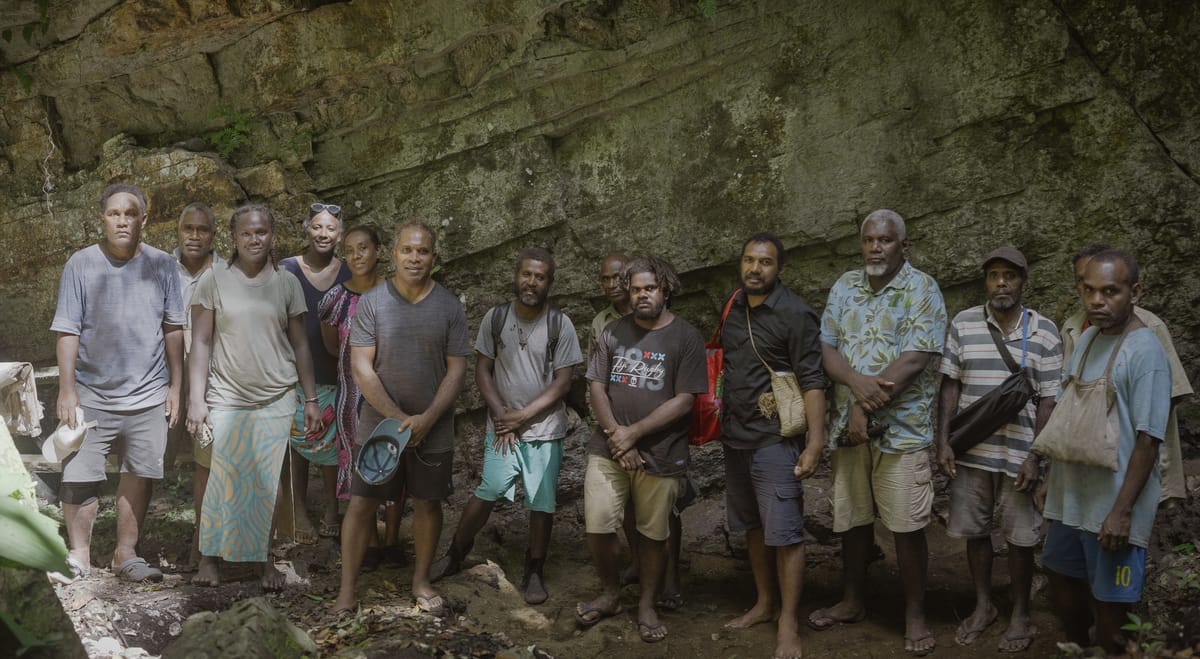
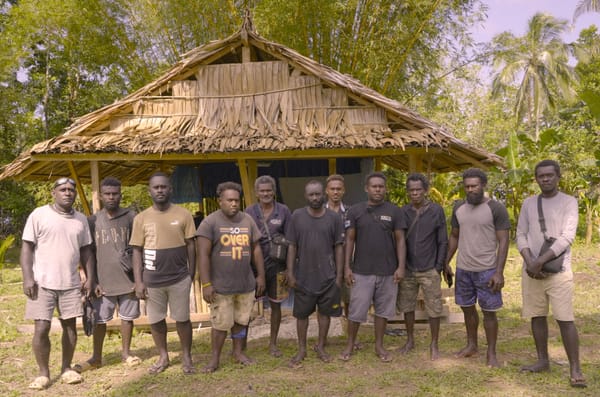
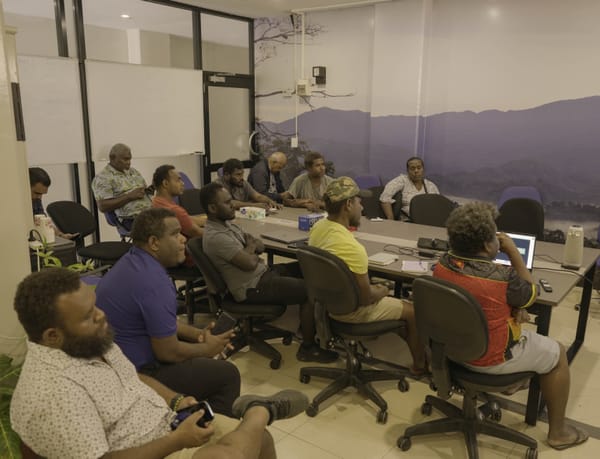
There is a moment, somewhere between the coast and the canopy, when you stop thinking about your lecture notes and start paying attention to where you actually are. That moment arrived for our cohort somewhere on the road toward Takataka Eco-Village in East Are'are, South Malaita, and by the time we sat in the chiefly meeting house that afternoon, most of us were quietly rethinking everything we thought we knew about governance, development, and education.
That is what the SOIL component of CIF801 Foundations is designed to do. SOIL stands for Solution, Ontology, Immersion, and Learning. The name matters. The Solution is not something you bring with you from the university. The Ontology is the Are'are community's own understanding of how the world is ordered and what obligations come with belonging to it. The Immersion is the act of actually going, of being received, of sitting with people rather than studying them. And the Learning is what happens when all three come together and you realise that the knowledge you were missing was never somewhere else. It was home.
"It stopped being a model and became a description." — a student after the Takataka visit
What we found at Takataka
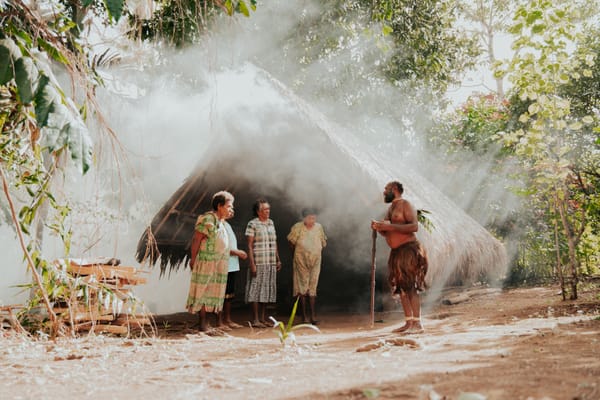
The community at Takataka did not present itself as a heritage site or a case study. It is a living place, with gardens terraced into the hillside, freshwater running through it, families who have been there for generations and intend to stay. What they shared with us was not a performance of tradition. It was a demonstration of a governance system still in active use.
The chief at Takataka does not accumulate authority upward. He holds something that has been placed in him by the land, the ancestors, and the people around him. When a decision needs to be made about the community's land or its future, the process looks nothing like a council vote or a ministerial directive. It looks like careful consultation, deep listening, and a weighing of obligations that go back through generations. Anyone who has ever wondered why a development project stalled in a Solomon Islands community, why consent was unclear or communities seemed disengaged, would find their answer very quickly in that meeting house.
We also encountered the Masina Ruru, which translates roughly as Blood Togetherness. It is a covenant framework, centuries old, that maps nine domains of community life including land, law, economy, kinship, health, spirituality, education, defence, and diplomacy. Nine ministries, essentially, built on relational rather than bureaucratic foundations. When I heard it described, my first thought was that the UN Sustainable Development Goals had caught up to something East Are'are had worked out long before the UN existed.
What Nima Education added to all of this
Several of us in the cohort had been working through Nima Education's digital resources before the trip. Nima is a platform that seriously takes the challenge of carrying customary knowledge into formal professional life without flattening it. How do you bring what you know from your community into a boardroom, a policy brief, a development proposal, without losing what made it meaningful?
In the classroom, Nima's frameworks felt useful. In the meeting house at Takataka, they felt true. The VCK model, which looks at any island community through three lenses (the Village as physical and ecological anchor, the Community as its network of relationships, and Knowledge as the living archive that holds it all together), had been, on screen, a useful analytical tool. Sitting in Takataka watching it operate in front of us in real time, it was something else entirely. The terraces outside the window were the Village. The way the elders and younger members moved together through the conversation was the Community. And the Masina Ruru being explained to us was the Knowledge, not preserved in a museum but practiced in the room that afternoon.
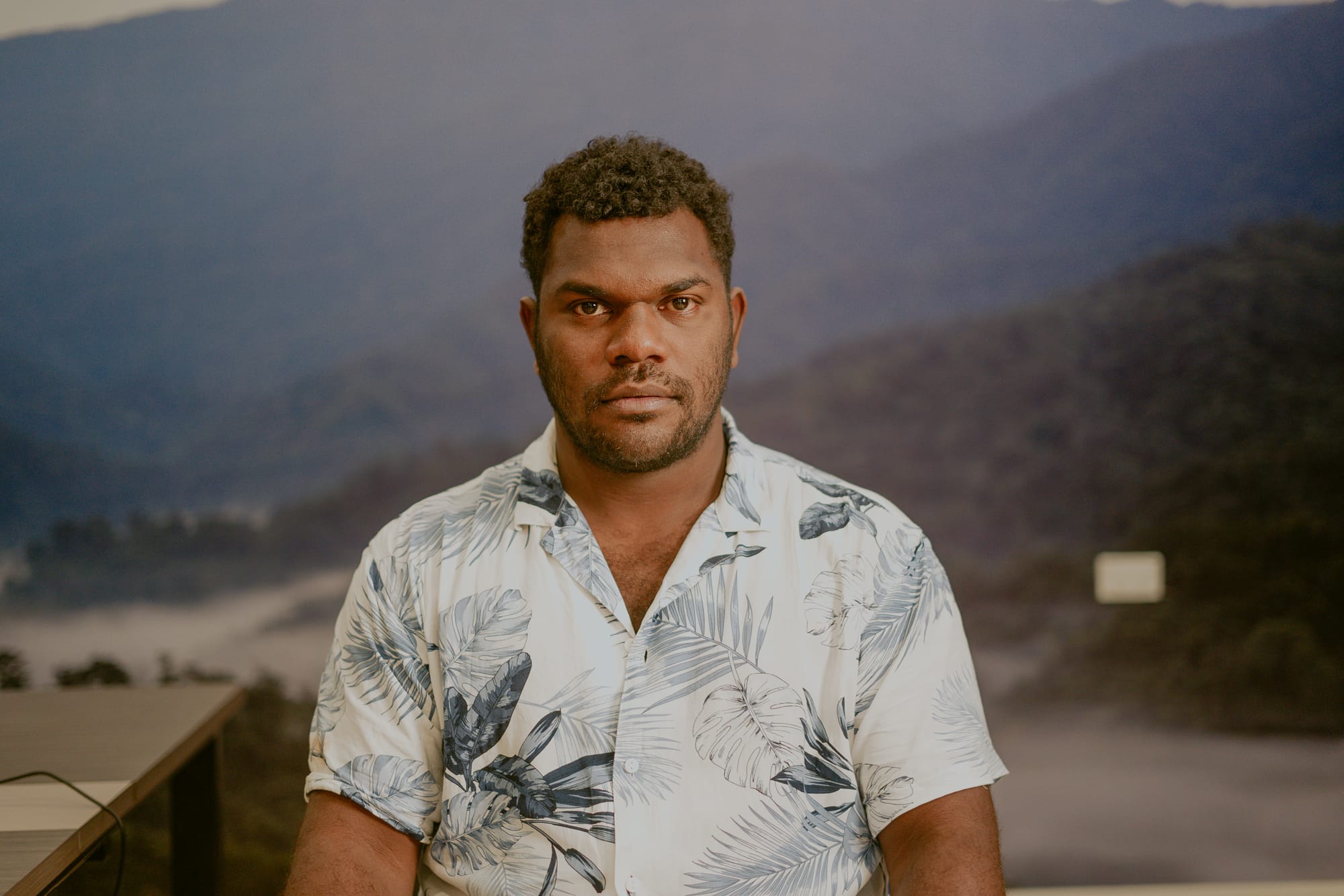
Nima Education deserves serioRobson Hevalao shares his CIF presentation during the SOIL field learning in Takataka, East Are'are.rastructure. The work of making these knowledge systems legible across platforms and contexts, without stripping them of their depth, is sovereignty work. It is as important as any legislation or international agreement.
Why does this matter beyond the classroom?
CIF801 Foundations is a postgraduate course at Solomon Islands National University. But what it is doing reaches well past any single campus. It is building professionals who do not have to choose between their cultural identity and their competence. A lawyer who understands lineage structures is better equipped to advise on land disputes. A health worker who understands customary consent is better equipped to deliver community programmes. An economist who understands customary exchange is better equipped to design livelihood initiatives that actually work.
The Pacific needs people who are fluent in both registers. Not translators who pick a side, but navigators who can hold both at once. That is what this course, and experiences like the SOIL trip to Takataka, quietly produce.
If you work in the Solomon Islands, in law or health or conservation or planning or public administration, and you have not yet encountered this course, I would encourage you to look it up. And if you fund or design development programmes here and you have not yet engaged with frameworks like VCK, Masina Ruru, or the community protocols of Sukaha, Haisoeha, and Ha'anoraha, then with the greatest respect, you are working without a map.
The ocean has always known the way. This course teaches us to read it again.
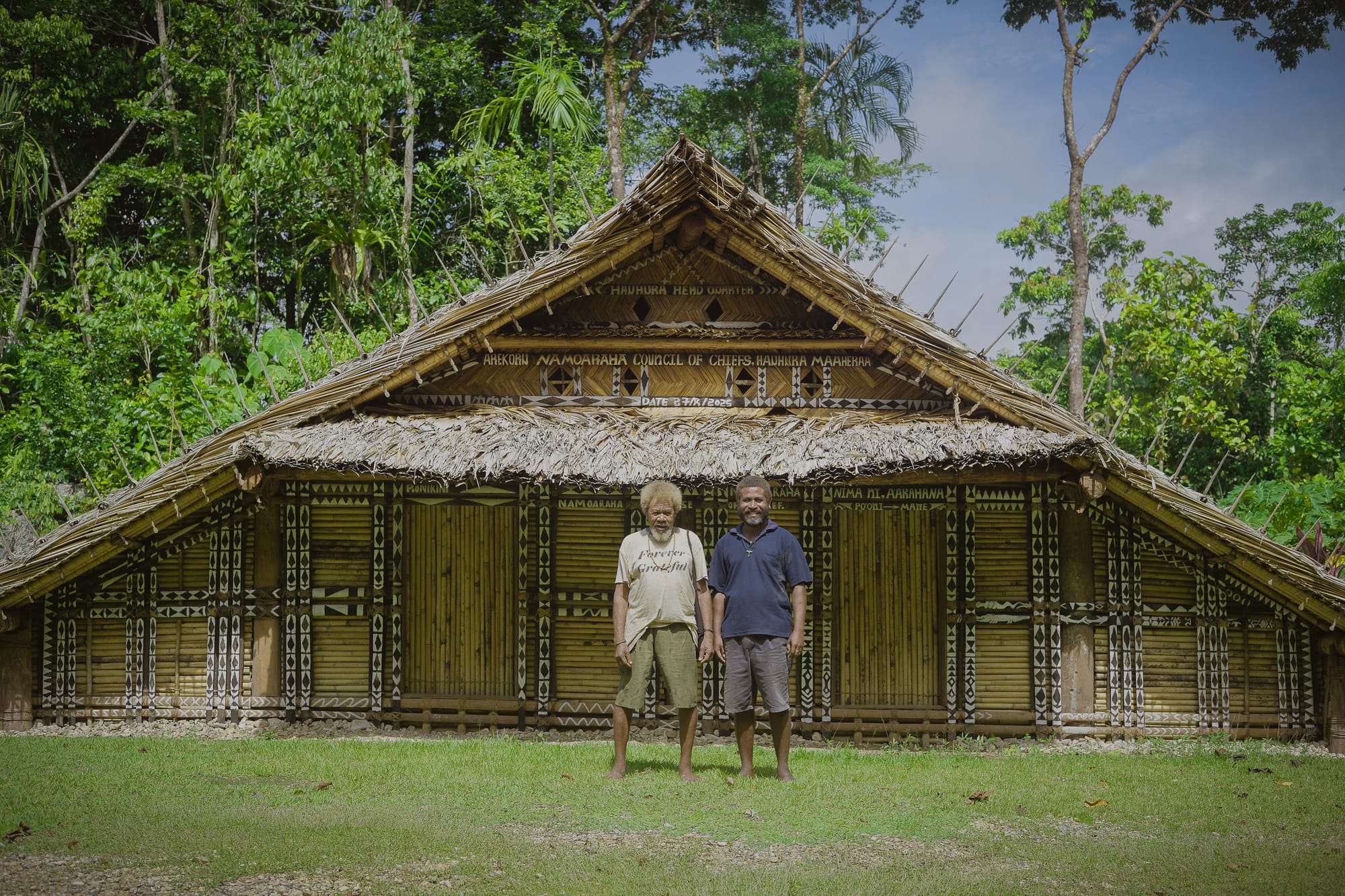
Chief Paurara and Robson during the CIF field learning visit to the Namoaraha Council of Chiefs in East Are'are. IKI/Jovi Totorea
By Mr. Robson Hevalao, Centre for Island Futures (CIF) student.
Originally published on LinkedIn (https://www.linkedin.com/pulse/trip-takata-eco-village-east-malaita-here-what-ever-taught-hevalao-qhflc/).
Republished on the Island Knowledge Institute (IKI) website with the author's permission.