Beyond the Grant: Learning from Baniata’s Guardians of the Leatherback Turtle
How community knowledge, long-standing relationships, and locally driven action are helping protect one of the ocean’s most remarkable species.
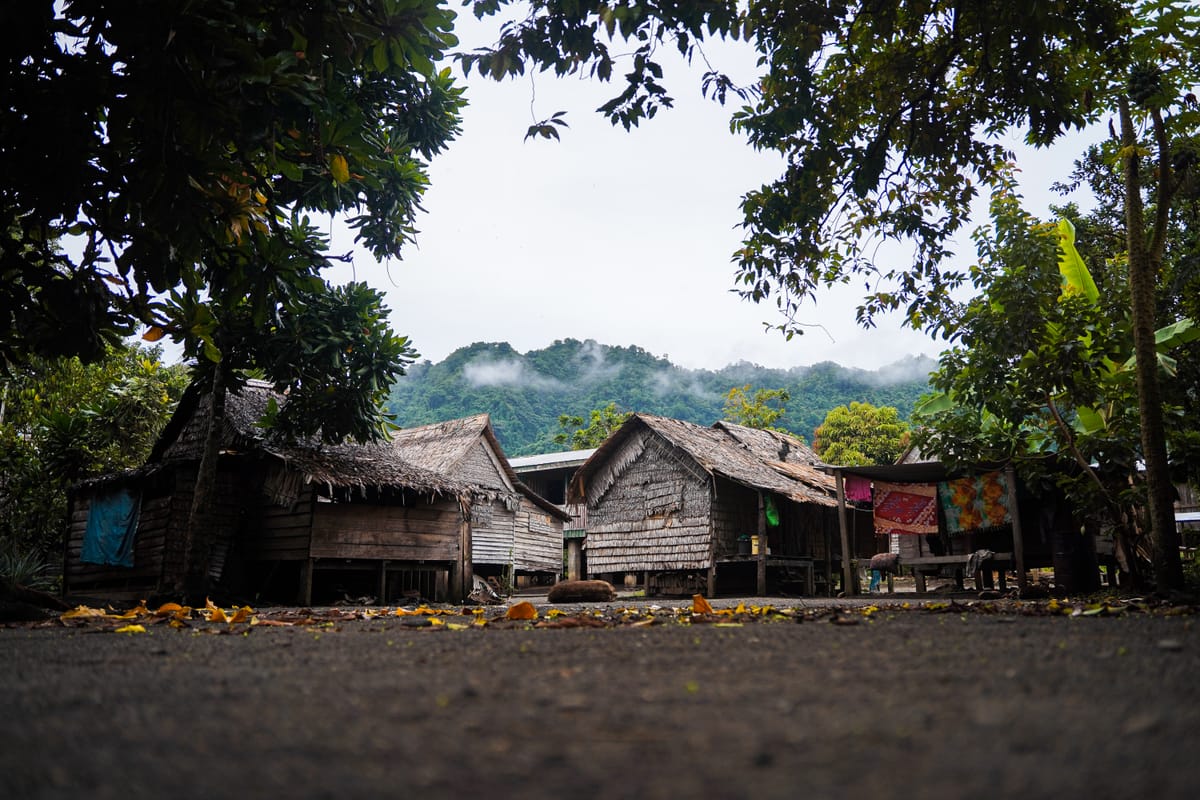
On 13 October 2026, our team travelled by boat from Munda to Baniata, arriving after approximately one and a half hours on the boat . We were there to see the progress of the Baniata MOR Community Support Grant, but what awaited us was more than a project visit. It was an opportunity to learn from a community whose commitment to protecting leatherback turtles is built on years of experience, close observation, and a deep connection with the sea.
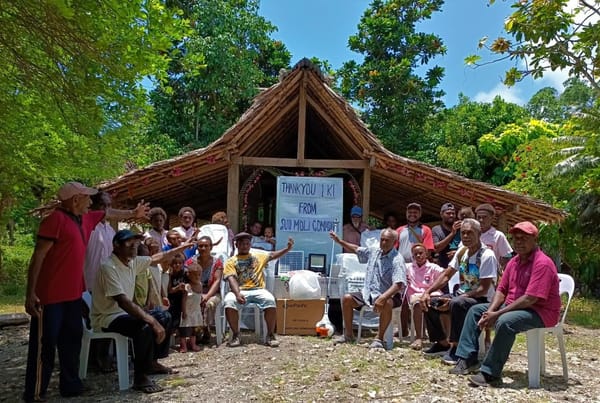
Our relationship with Baniata began in 2025, when the Islands Knowledge Institute (IKI), through the Melanesia Ocean Reserve (MOR) programme, visited the community as part of its media campaign. The community generously welcomed the media team, allowing its people, culture, and connection with the marine environment to be filmed and photographed. By sharing their stories, the people of Baniata helped communicate a broader message about the importance of the ocean and its connection to cultural identity, livelihoods, and community wellbeing across Melanesia.
Their contribution helped bring the MOR campaign to life, and IKI benefited from the trust and relationships that made the engagement possible. But it also left IKI with an important question: How do we ensure that a relationship continues to grow after the cameras are packed away?
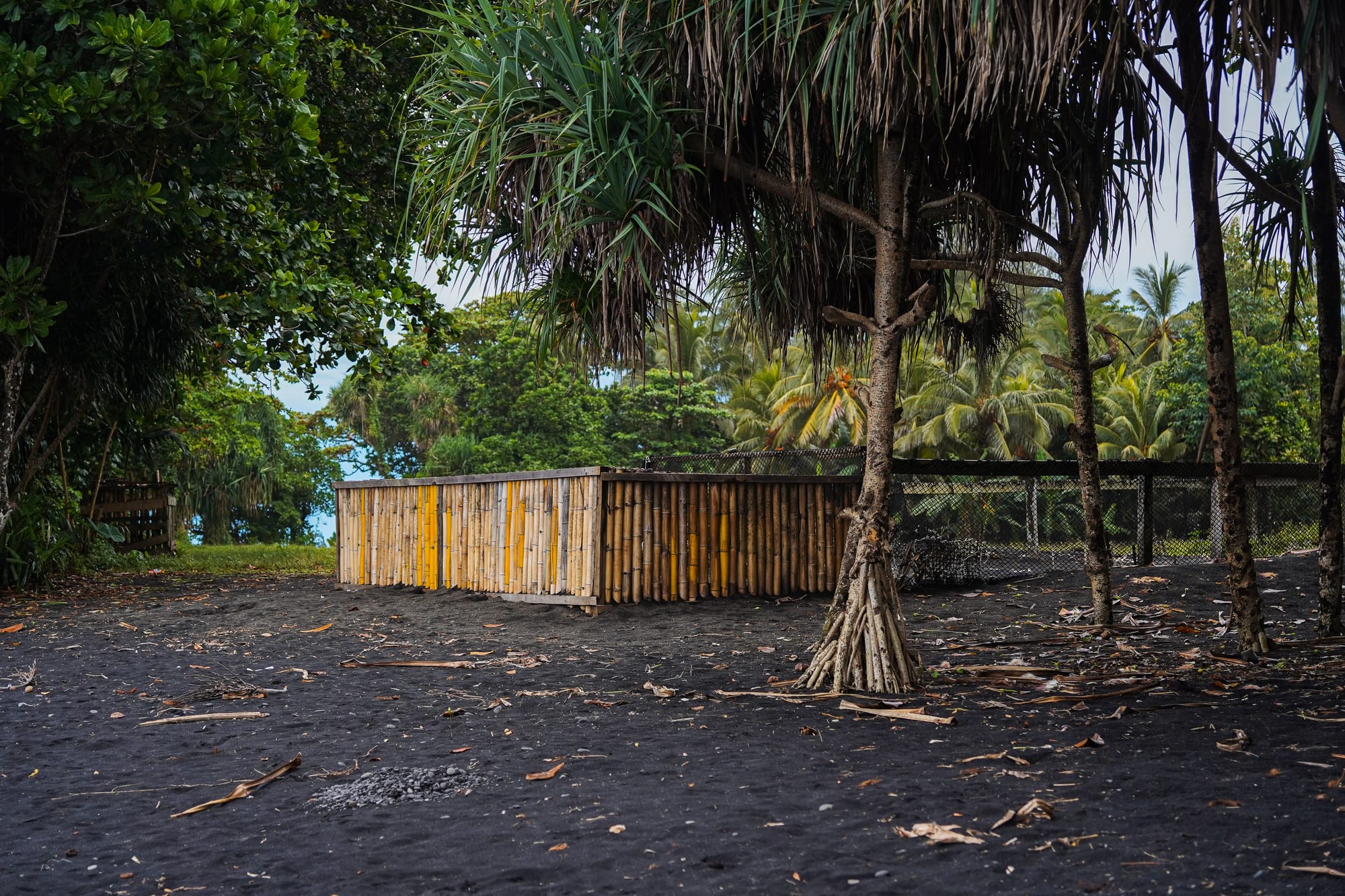
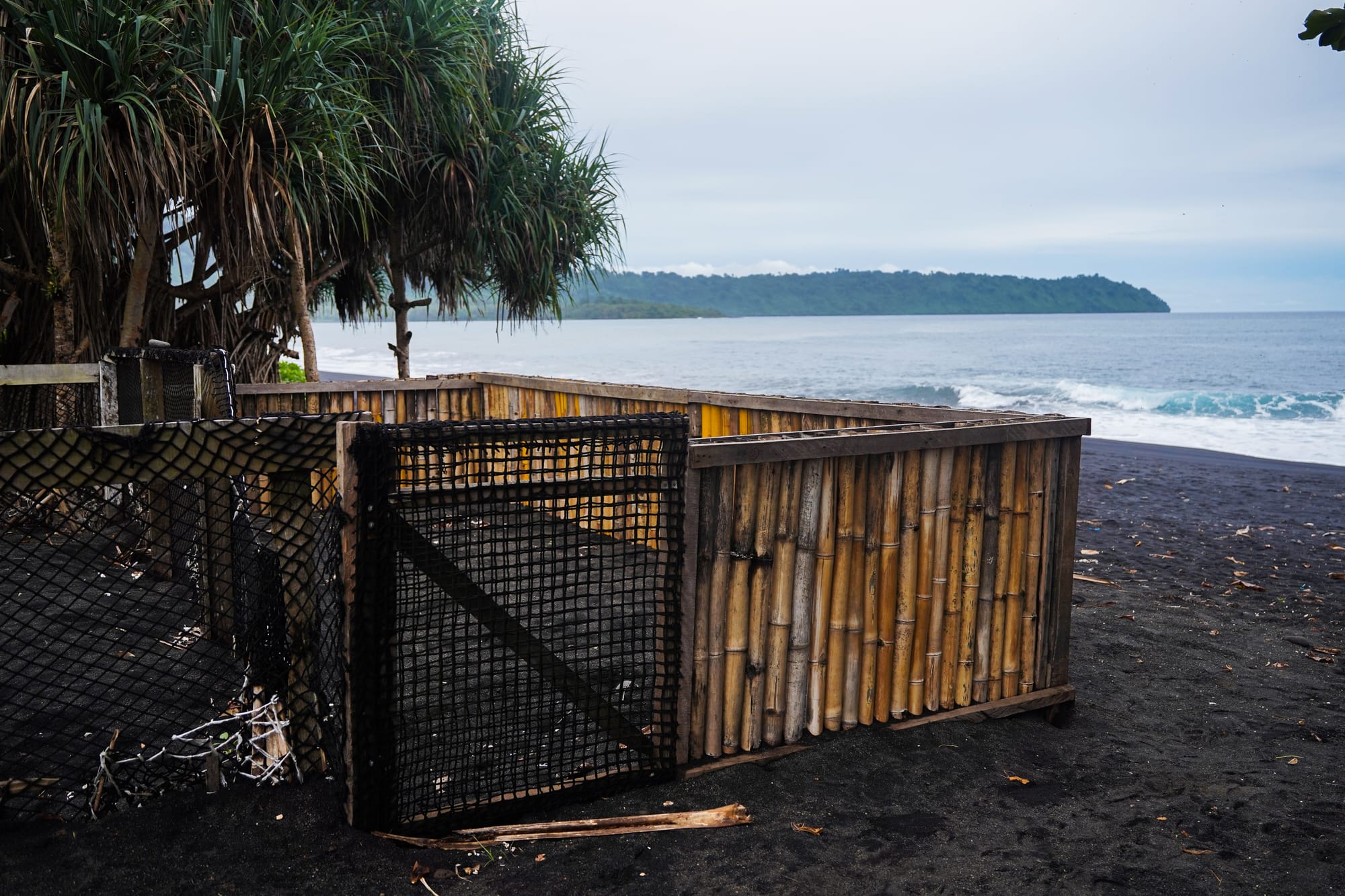
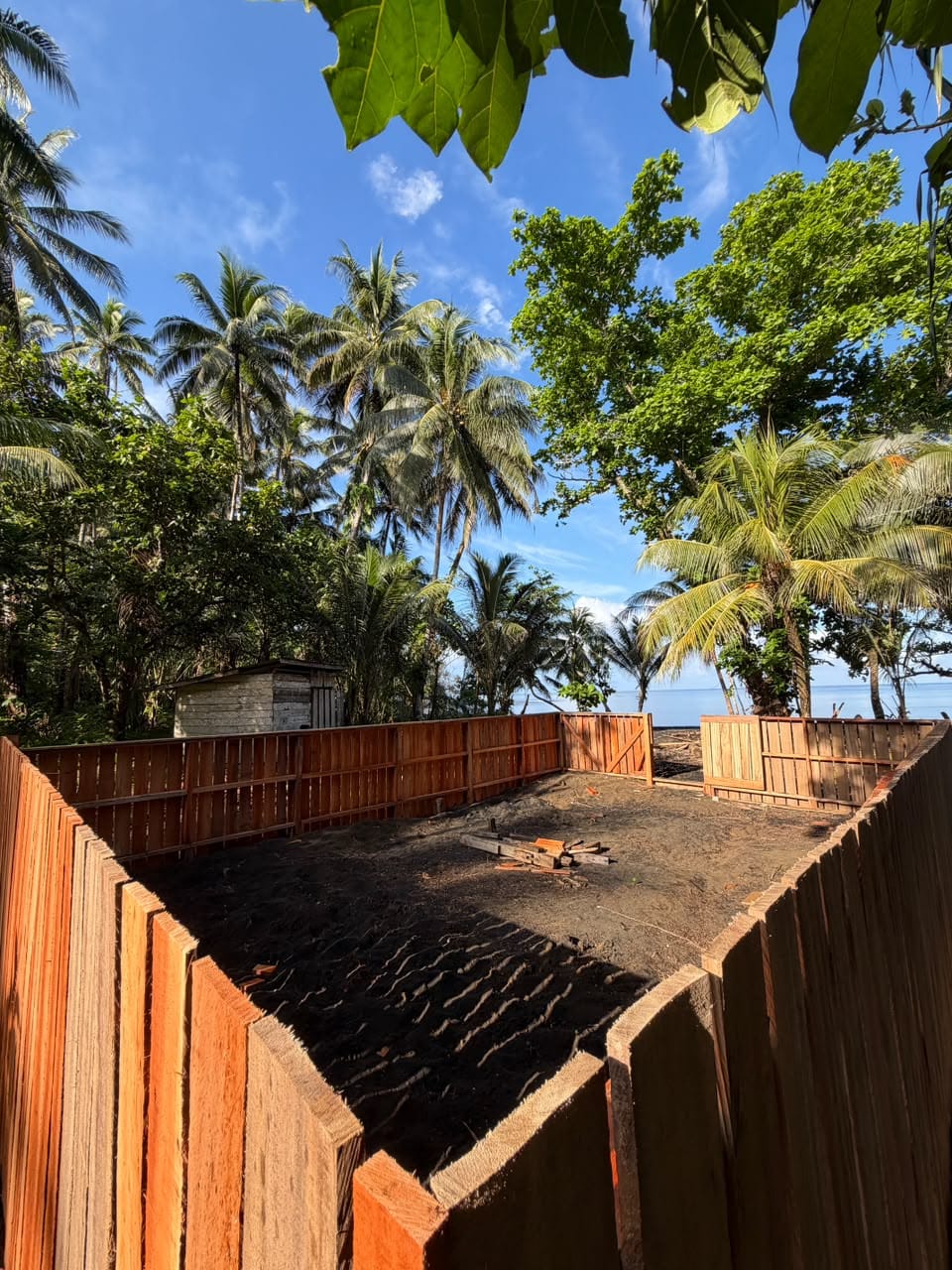
one of the Turtle Hatchery in Baniata. IKI/Douglas Jnr Pikacha
When the MOR team returned to present the photographs from the first visit, the conversation turned to how the community’s contribution could be appropriately acknowledged. Rather than deciding on the community’s behalf, we asked what would be meaningful to them. After considering different possibilities, Baniata identified the rebuilding of three leatherback turtle hatcheries damaged by Cyclone Maila as its preferred priority.
The decision was significant because it came from the community itself. The support was an expression of appreciation and reciprocity, recognizing Baniata’s contribution to the MOR campaign while responding to a practical need identified by the people doing the conservation work.
As we approached Baniata’s shoreline, lead ranger Mr. Johnson Haron and members of his ranger team were there to welcome us. After we came ashore, they guided us to a communal rest house where visitors gather. The cool sea breeze, warm greetings, and the community’s thoughtful arrangements for receiving guests offered an immediate glimpse into the relationships and organization that underpin life in Baniata.
We soon settled into a tok stori session to hear how the community was using the IKI-supported grant. As Mr. Haron began sharing the ranger team’s work, I realized that this was not simply an opportunity to review project progress. It was an opportunity to learn from people whose understanding of leatherback turtles had developed through more than fifteen years of experience.
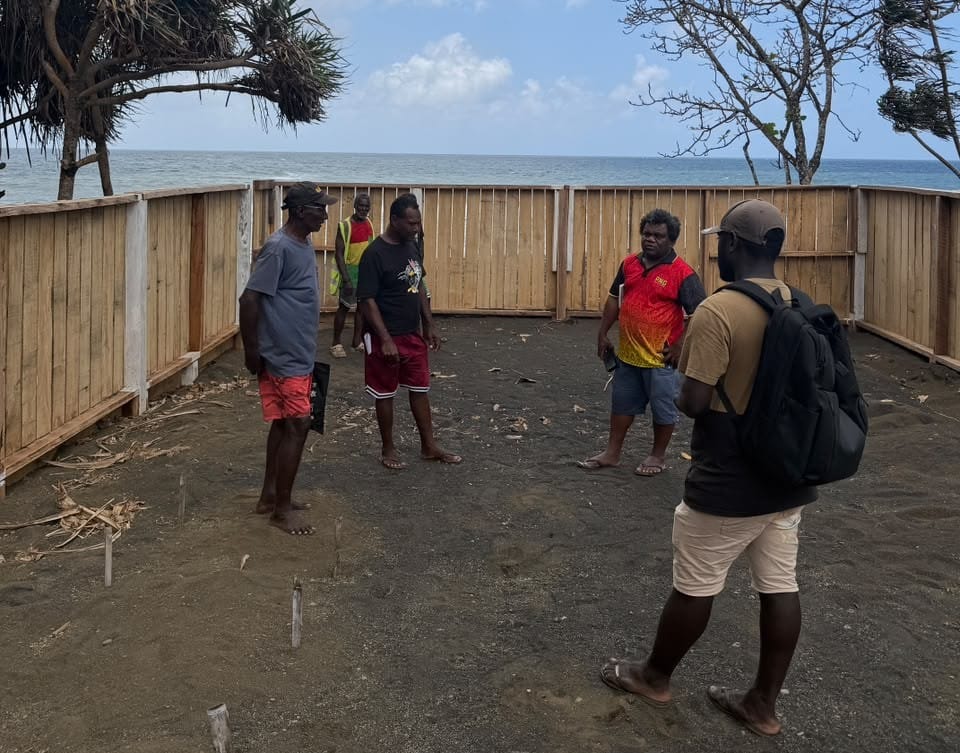
site visit by IKI team. IKI/Pana Paza
Mr. Haron explained that October to March is an important nesting season, when leatherback turtles come ashore along the Baniata coastline to lay their eggs. During this period, the rangers monitor nesting activity and carefully manage the eggs to support their survival. They record the depth at which eggs are laid, transfer them to the hatcheries at a comparable depth, cover them carefully, and label them according to their expected hatching dates.
Listening to these accounts helped me appreciate the level of care, patience, and practical knowledge involved in this work. Turtle conservation is not simply about protecting eggs. It requires understanding nesting behavior, recognizing seasonal patterns, and applying lessons learned over many years of working along the same coastline.
This knowledge cannot be gained from a single visit or a project report. It comes from experience, observation, and a continuing relationship with the environment.
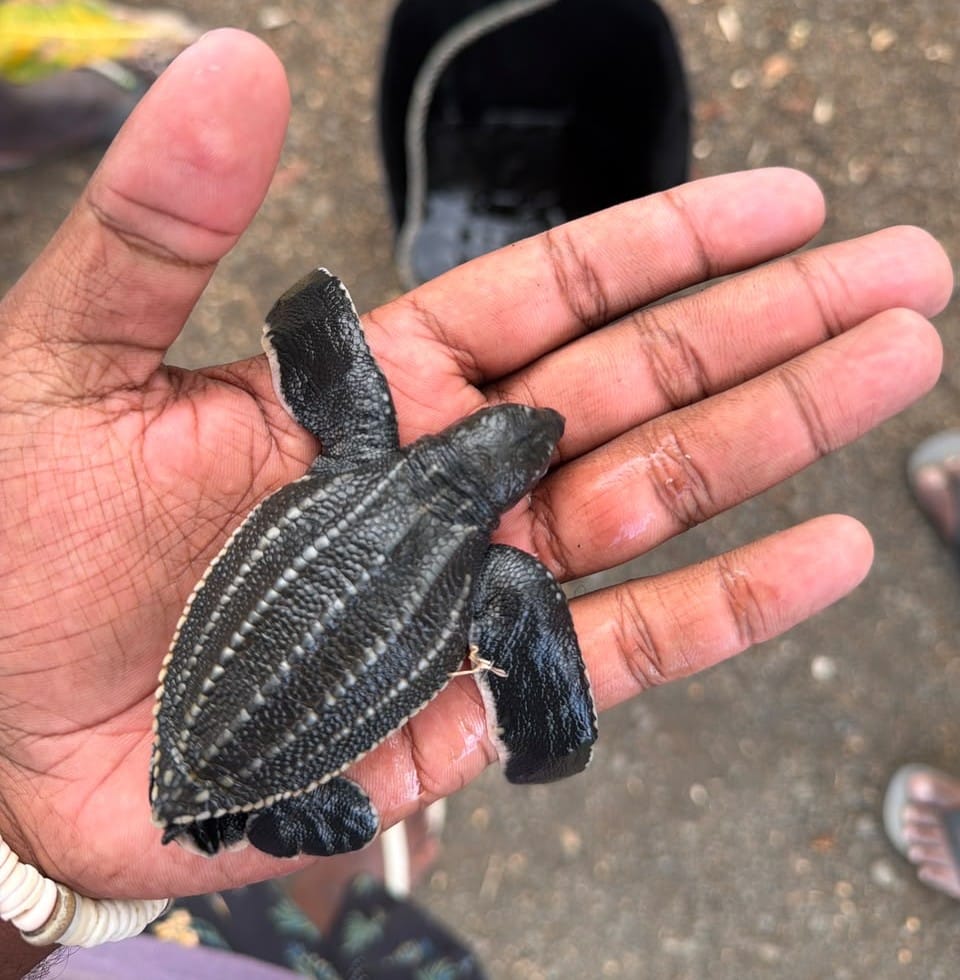
One of the most memorable moments of our visit was seeing and holding some of the approximately 100 turtle hatchlings. There was something powerful about witnessing these tiny creatures after hearing the stories of the people working to protect them. The experience brought the rangers’ commitment into perspective and reminded me why their work matters.
During our discussions, the rangers also shared their observation that more leatherback turtles had returned to the Baniata coastline to lay their eggs this year. While this is an encouraging development, continued monitoring will be important to understand longer-term trends. For the rangers, however, each nesting turtle and each hatchling represents a reason to continue their work.
The IKI-supported grant came at an important time, helping the community prepare its hatcheries for the peak nesting season. During our visit, we learned that two of the three hatcheries had been completed, with the remaining hatchery expected to be completed by the end of October 2026. These facilities will help the rangers continue their conservation activities during the busy nesting months ahead.
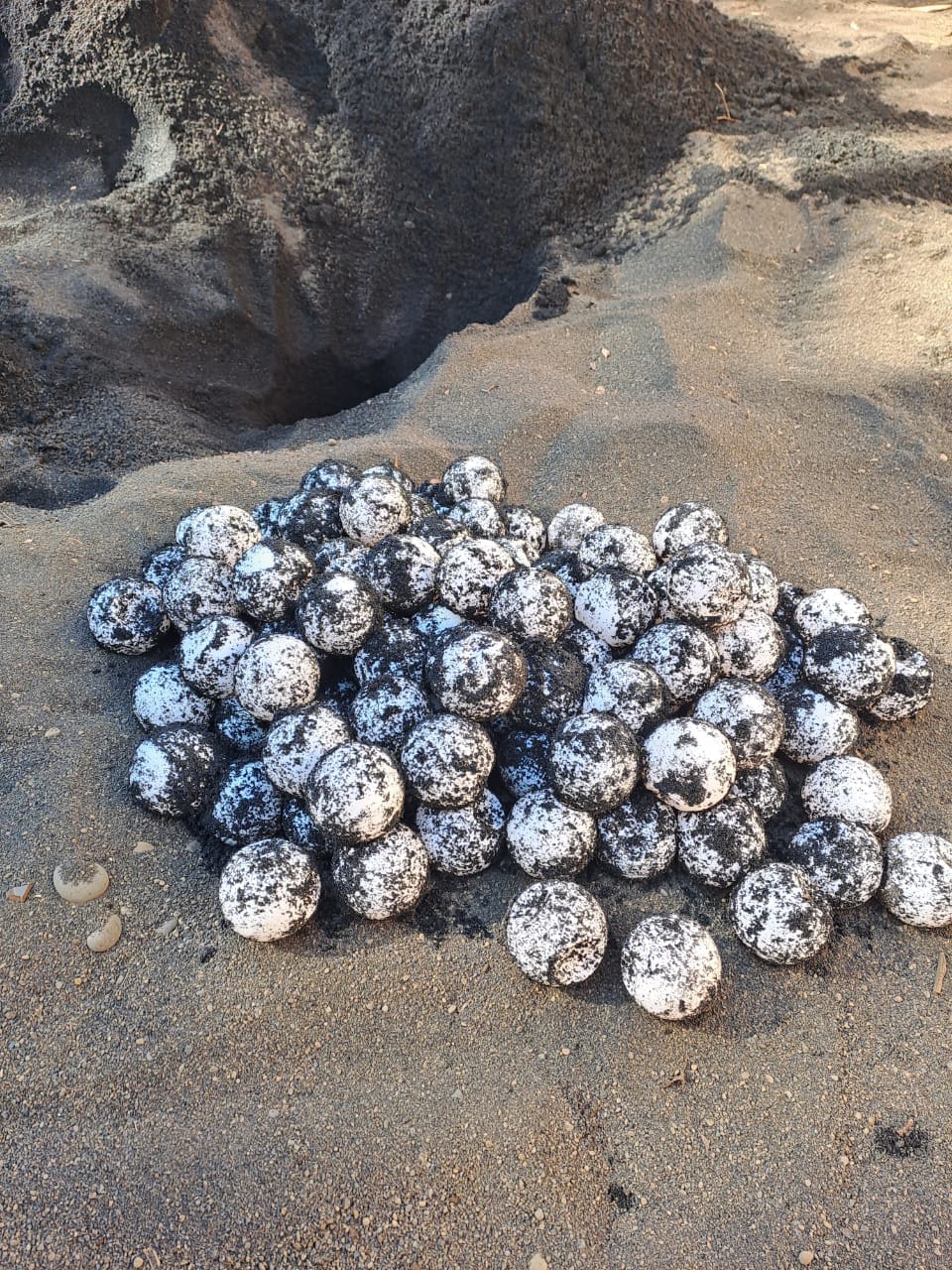
leatherback turtle eggs at one the turtle hatchery sites. IKI/Pana Paza
As we prepared to leave Baniata, I reflected on how much I had learned in just a few hours. The experience reminded me that community conservation is sustained not only by infrastructure or financial support, but also by the knowledge, dedication, and relationships of the people who carry the work forward.
For Baniata, protecting leatherback turtles is more than a conservation activity. It is a commitment shaped by years of experience and an enduring relationship with the sea. Supporting the rangers means helping them continue work that is already deeply rooted in their community.
The visit also reinforced an important lesson about the way we work with communities. Meaningful support begins with listening, recognizing local priorities, and respecting the knowledge that communities bring to conservation. It means ensuring that relationships do not end when a campaign finishes but continue through opportunities for mutual learning and practical collaboration.
As we left the shores of Baniata, I carried with me more than the memory of seeing the hatchlings. I carried a deeper appreciation for the people behind their protection and the quiet dedication required to sustain conservation over generations.
Sometimes, the greatest lesson from a community visit is not what we have contributed, but what the community teaches us. In Baniata, the rangers’ stories reminded me that protecting the ocean begins with people who know it, care for it, and remain committed to safeguarding it for generations to come.
Author: John Maefasimaoma
Islands Knowledge Institute Comms