Beyond the Ocean: Capturing the Living Knowledge of Melanesian Communities
A journey through Vanua Lava and Tanna to document how Melanesian people remain connected to their land, ocean, culture, and knowledge
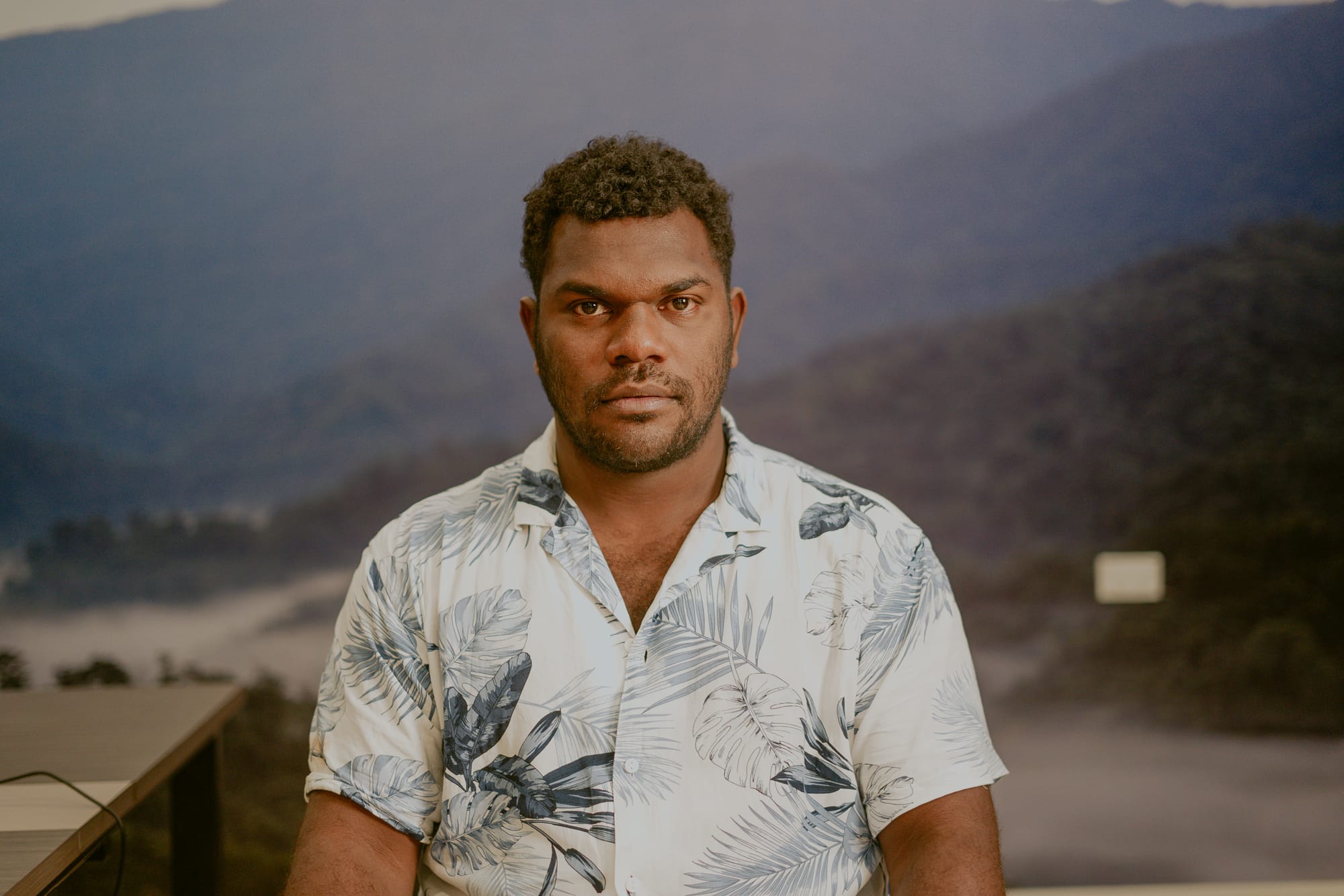
The ocean is more than water surrounding the islands of Melanesia. For generations, it has been a pathway for movement and trade, a source of food and livelihoods, and a foundation of cultural identity, stories and knowledge. For the Island Knowledge Institute (IKI), documenting these relationships is an important part of ensuring that the knowledge of Melanesian communities is recognised and passed on to future generations.
As part of the Melanesian Ocean Reserve (MOR) initiative, the MOR Media Team travelled to Vanuatu to capture photographs and stories that show the deep connections between people, their islands and the ocean. With support from IKI and its partners in Vanuatu, the team visited Vanua Lava in northern Vanuatu and Tanna Island up in the South, spending time with communities in Vetimboso and Narawia.
Connecting islands beyond modern borders
The journey began in Vanua Lava, in northern Vanuatu, close to Temotu Province in the Solomon Islands. The visit offered an opportunity to recognise connections between Melanesian islands that existed long before modern borders separated the countries of the region.
For generations, people have moved between these islands through trade, relationships and intermarriage. These connections continue to remind us that Melanesian communities share histories and knowledge that cannot always be understood through national boundaries alone.
In Vetimboso, the team was welcomed by a community that operates a kastom school where young people learn traditional arts, crafts and knowledge passed down through generations.
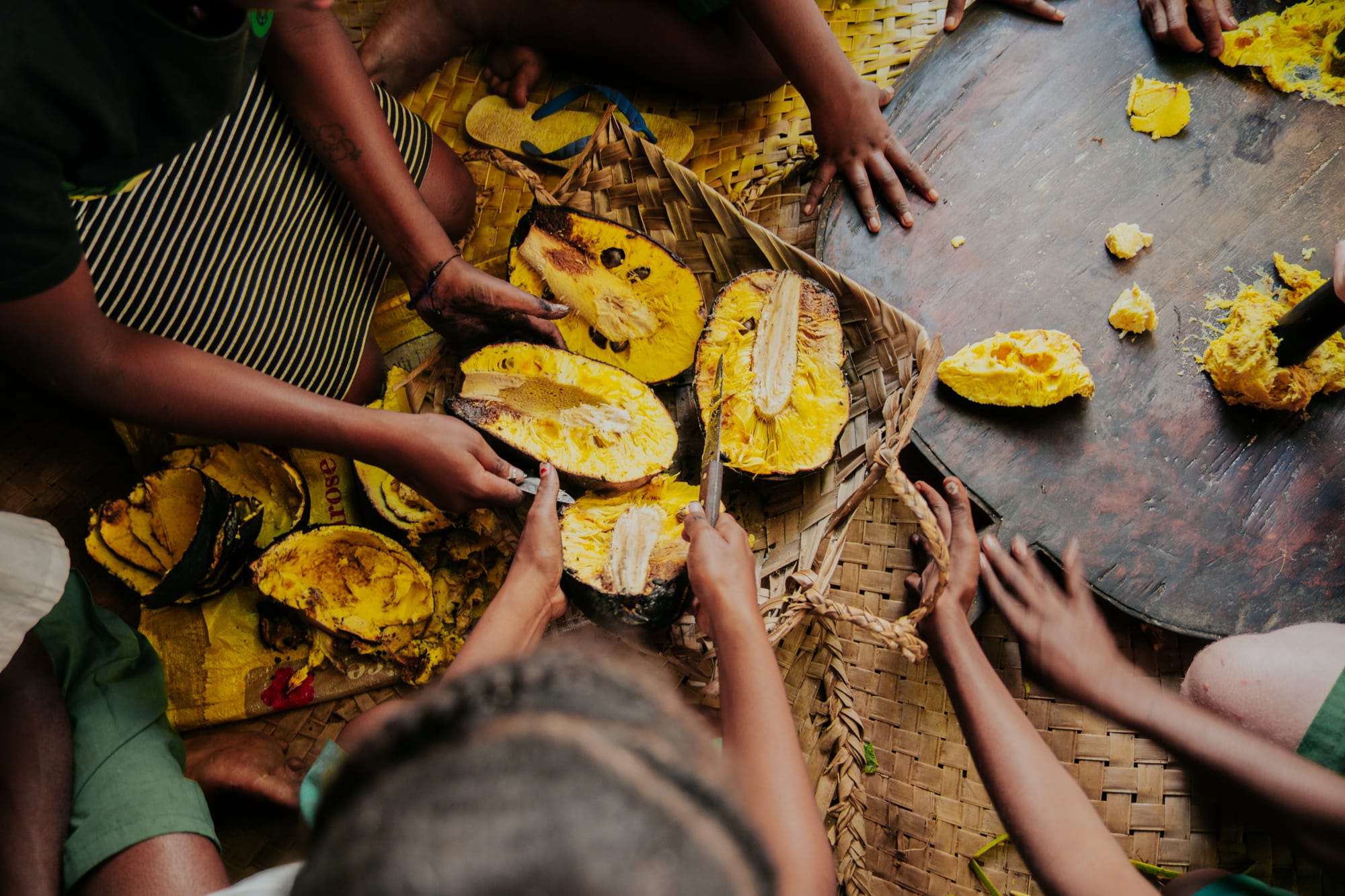
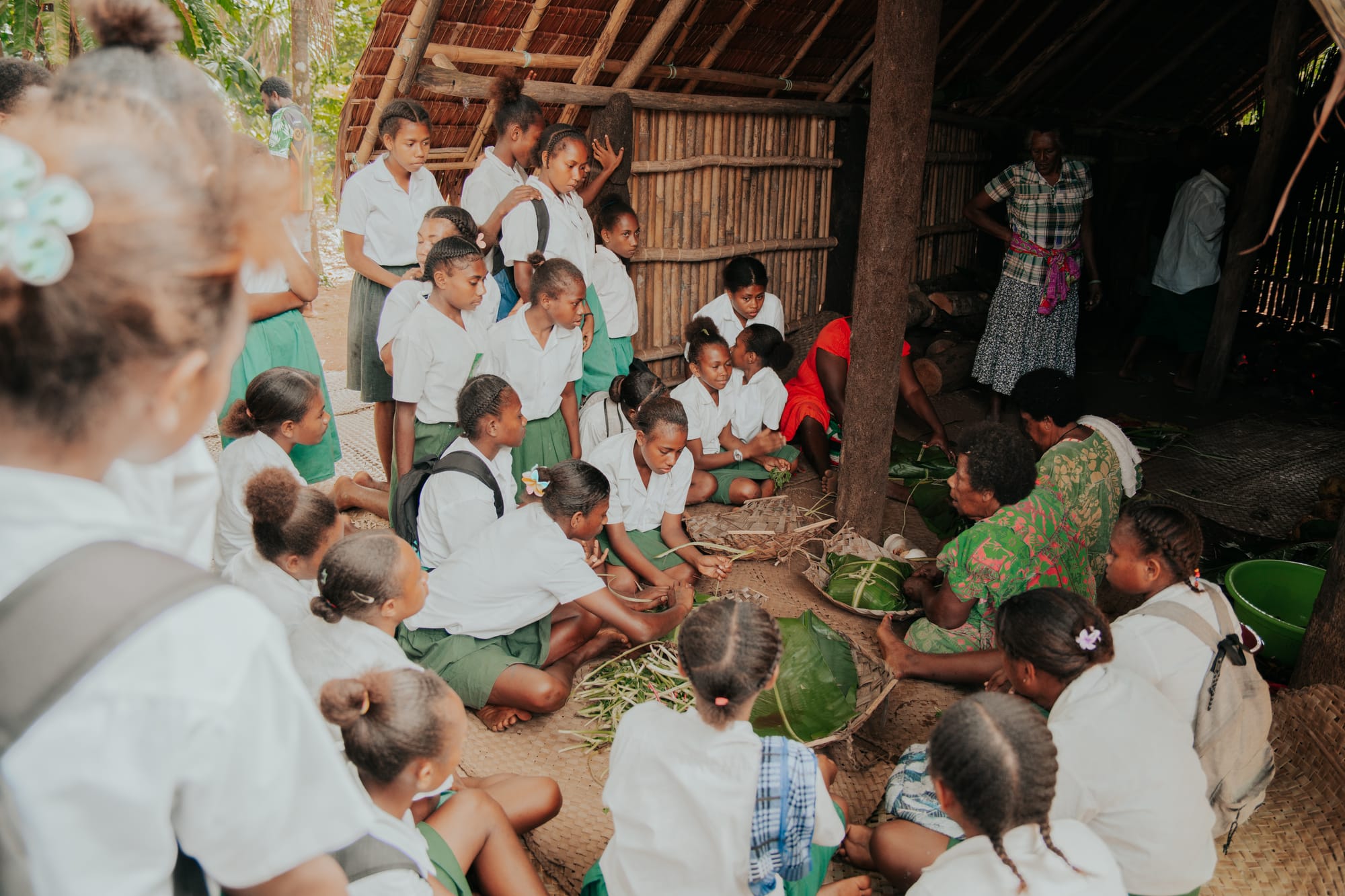
Vetimboso Community, Sanlang students participating in the slow food (Nalot - roasted breadfruit) preparation during Kastom Skul Open Day. IKI/Benji Kon
During the visit, the team documented the kastom school's open day, including arts and crafts and traditional slow food preparation. But the most important part of the experience was not simply what was photographed. It was how the community led the process.
Community members guided the photography, established cultural boundaries and helped determine how their stories should be represented. For members of the media team, this was an important experience because it demonstrated a different way of working with communities, one where the community leads rather than follows the direction of an outside organisation.
Learning from Tanna
From Vanua Lava, the team travelled to Tanna Island and spent three days with the community of Narawia.
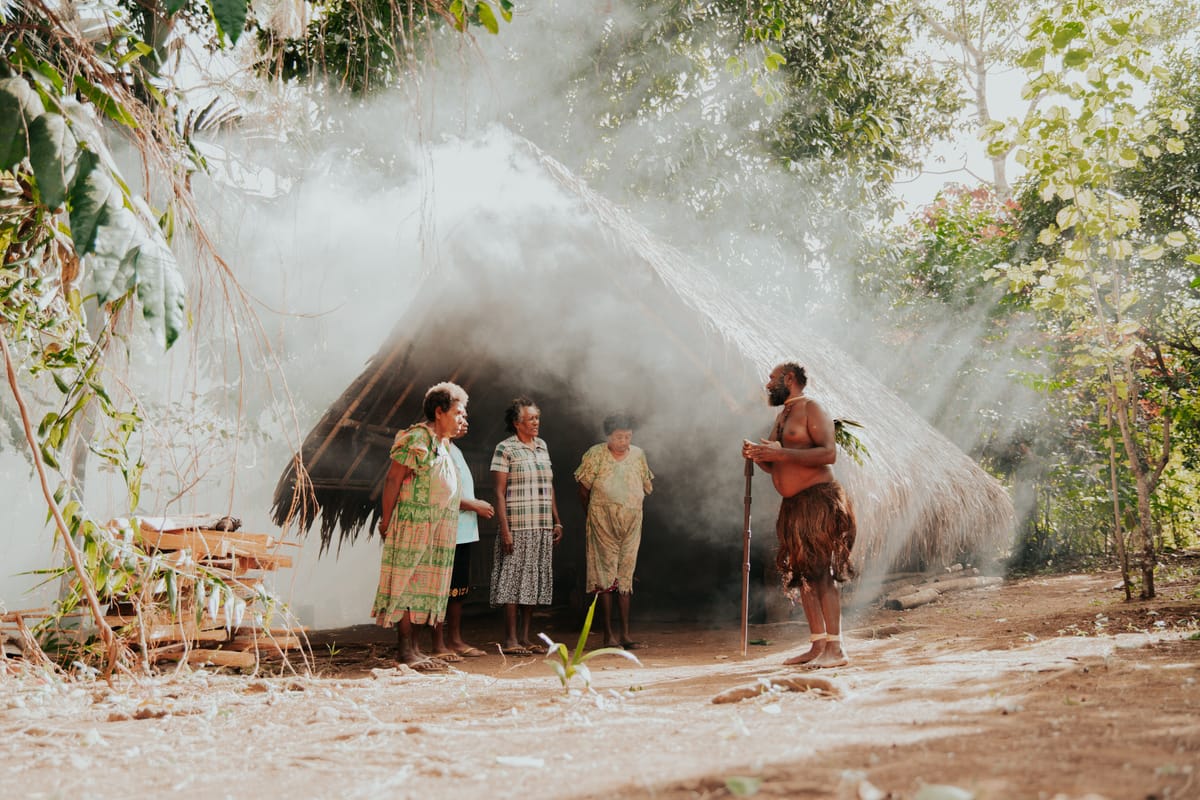
The community welcomed the team and shared stories connected to traditional yam planting. The team documented the different stages of yam cultivation and learned about the relationships among yam, land, food, and the ocean.
The visit also provided an opportunity to witness traditional food processing and experience the fertile landscapes of Tanna. At Mount Yuser, the team encountered the living oral stories that continue to connect Tanna's people with their island.
These experiences demonstrated that the value of an island cannot be measured only by infrastructure or what is visible to an outside observer. Land and ocean can hold gardens, fishing grounds, medicines, cultural places, stories and knowledge that are essential to the lives of communities.
As Fancy Brown, an IKI partner from Nia Tero in Vanuatu, highlighted: “Our ocean and land are already developed, but someone from outside may see an empty piece of land or sea and think it is undeveloped. Yet, this is where we make our gardens, fish, gather medicine, and sustain our communities. This is what we understand as development, not infrastructure alone.”
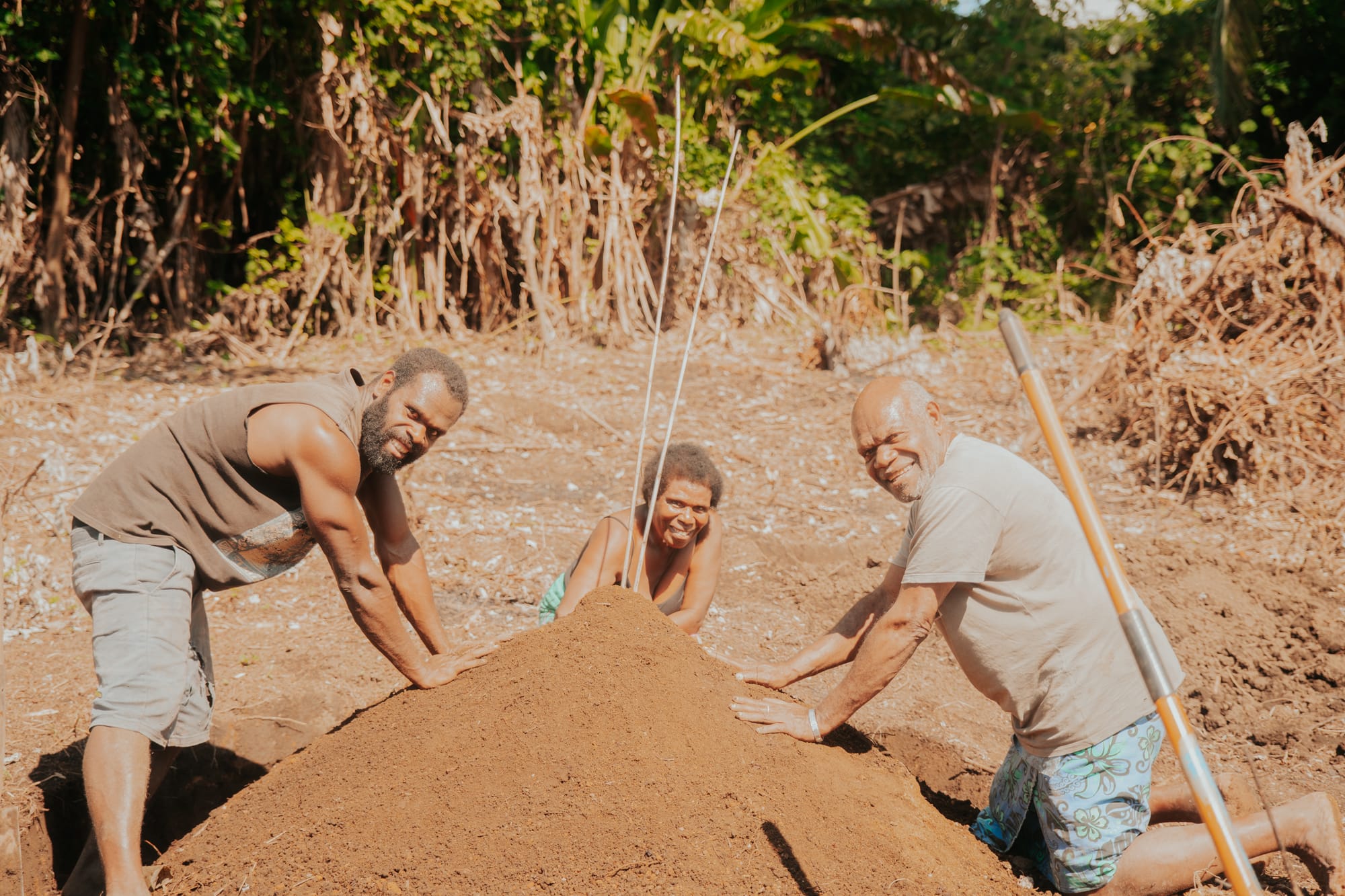
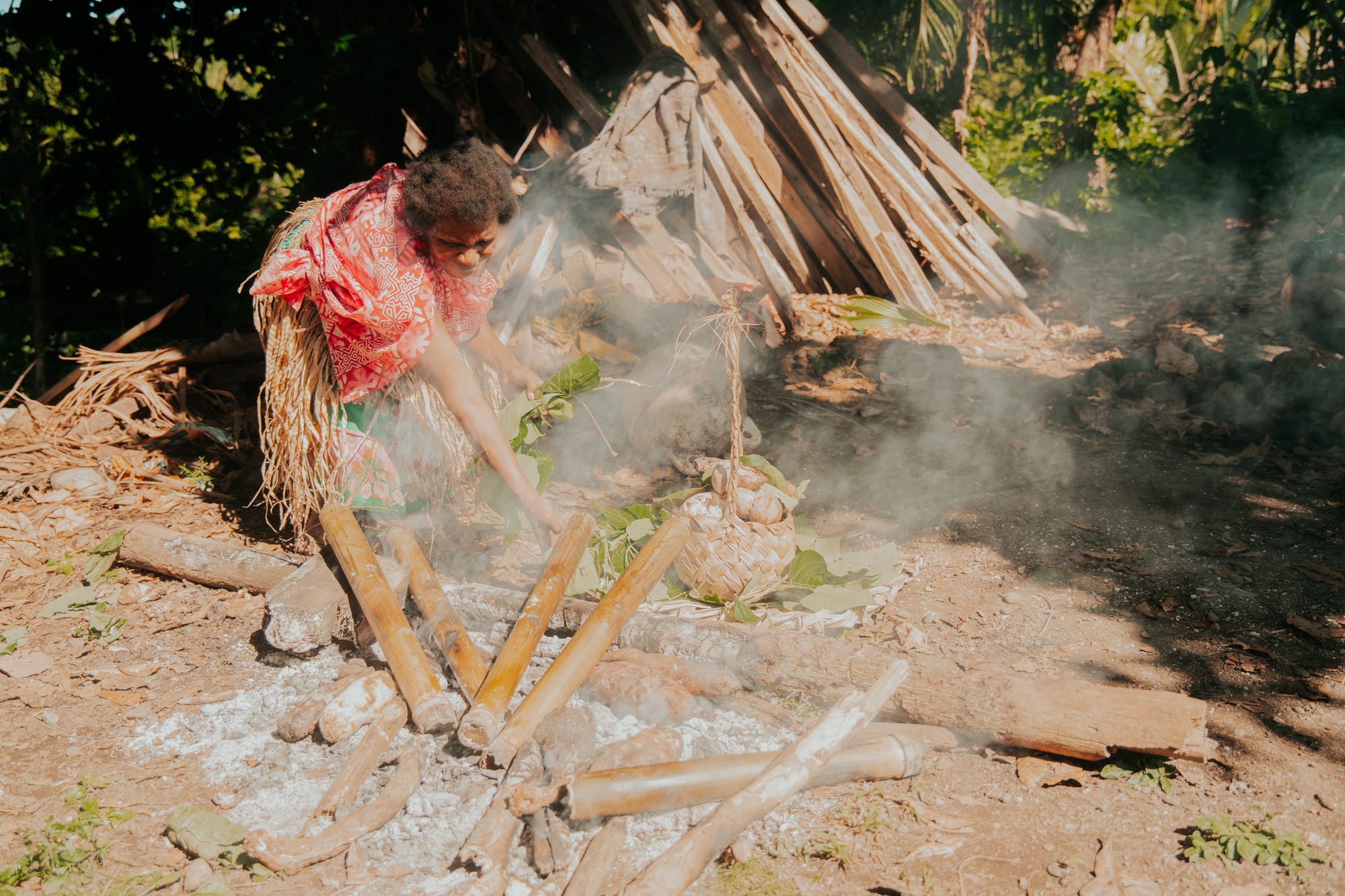
Chief Philip’s family plants yam during the traditional yam-planting season, which begins every July. They also carefully prepare traditional slow food over an open fire, using age-old cooking techniques passed down through generations on Tanna Island.Photos: IKI / Benji Kon
When communities lead, stories become stronger.
The experience in Vanuatu also reinforced the importance of relationships and trust.
Benji, a member of the MOR media team, highlighted the value of connecting with communities through media and creating opportunities for people to share their own stories and exchange knowledge. The community-led approach was particularly significant because it showed how media work can be carried out with communities rather than simply for communities.
Pascal, a chief from Tanna, also emphasised the importance of recognising island leadership and governance. Supporting knowledge that belongs to communities is important not only for the people themselves, but also for the wider world to understand Indigenous knowledge and identify solutions to challenges such as climate change.
For IKI, these lessons are central to its approach: relationships matter, trust matters, and communities must have the opportunity to lead the work that concerns their knowledge, culture and places.
The meaning of the Melanesian Ocean Reserve
The photographs captured during this journey are more than images of beautiful landscapes or people. They tell stories about a way of life that has sustained Melanesian communities for generations.
They show that the ocean and land are deeply connected to food, culture, spirituality, governance and identity. They also help challenge the idea that places without modern infrastructure are empty or undeveloped.
The Melanesian Ocean Reserve is ultimately about people and the resources of the islands they have long depended on resources that communities seek to manage, protect, lead and govern in ways that reflect who they are as Melanesian people.
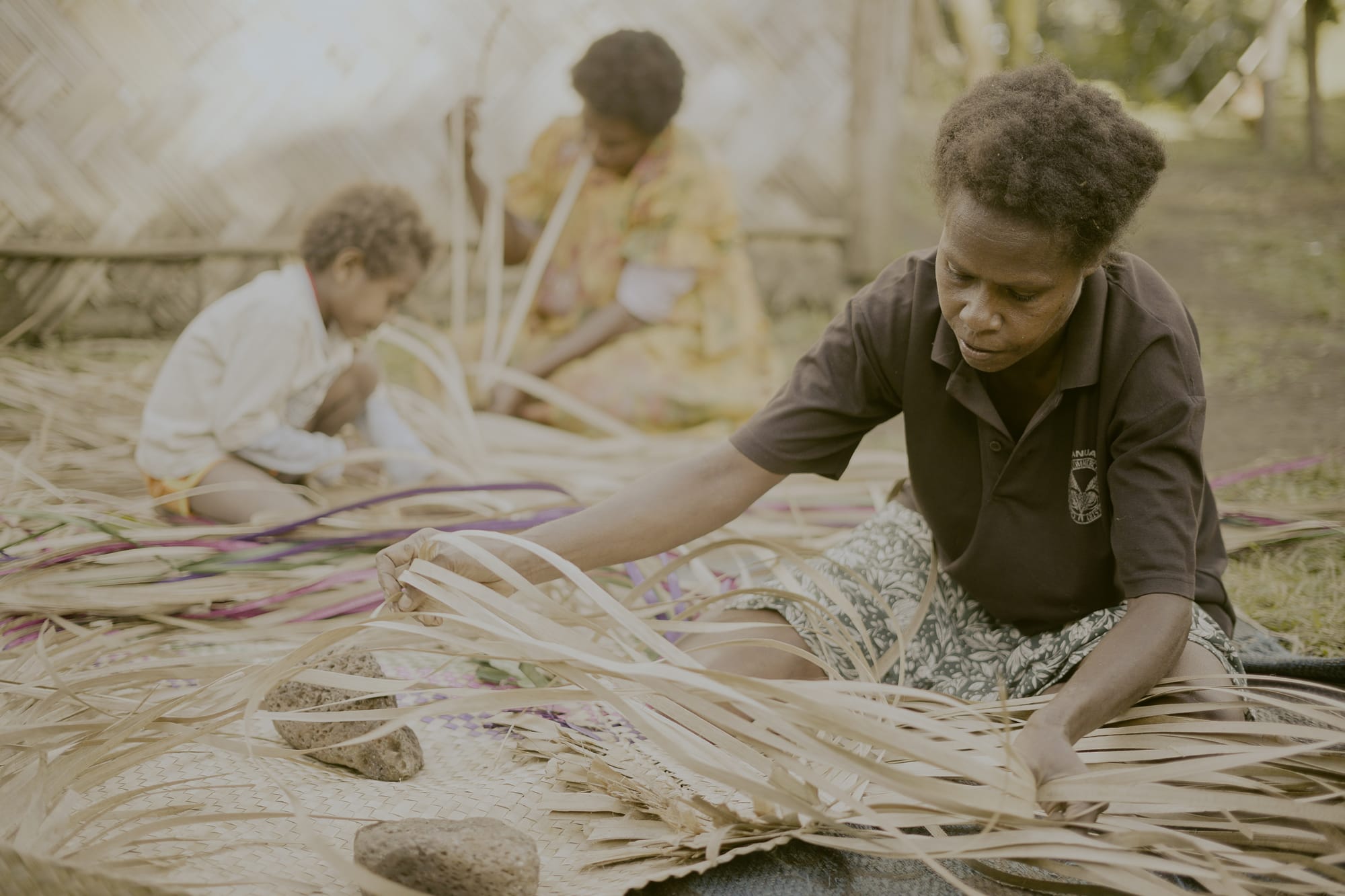
A mother on Tanna Island carefully weaves a traditional pandanus mat while the young child watches nearby. IKI/Jovi Totorea
Looking ahead
The journey through Vanua Lava and Tanna has strengthened an important message: protecting the ocean also means recognising the people and knowledge that have lived with it for generations.
Through photography and storytelling, IKI and its partners can help bring these community perspectives into wider conversations about conservation, climate change, development and governance. But the strength of these stories depends on continuing to build trust and ensuring that communities remain at the centre of how their knowledge is documented and shared.
The future of Melanesian islands will not be shaped only by outside decisions. It must also be guided by the knowledge, leadership and lived experiences of the people who call these islands home.
Our knowledge. Our stories. Our ocean. Our future.