Bae Lafe La: Honouring the People of the Sea
Press Release
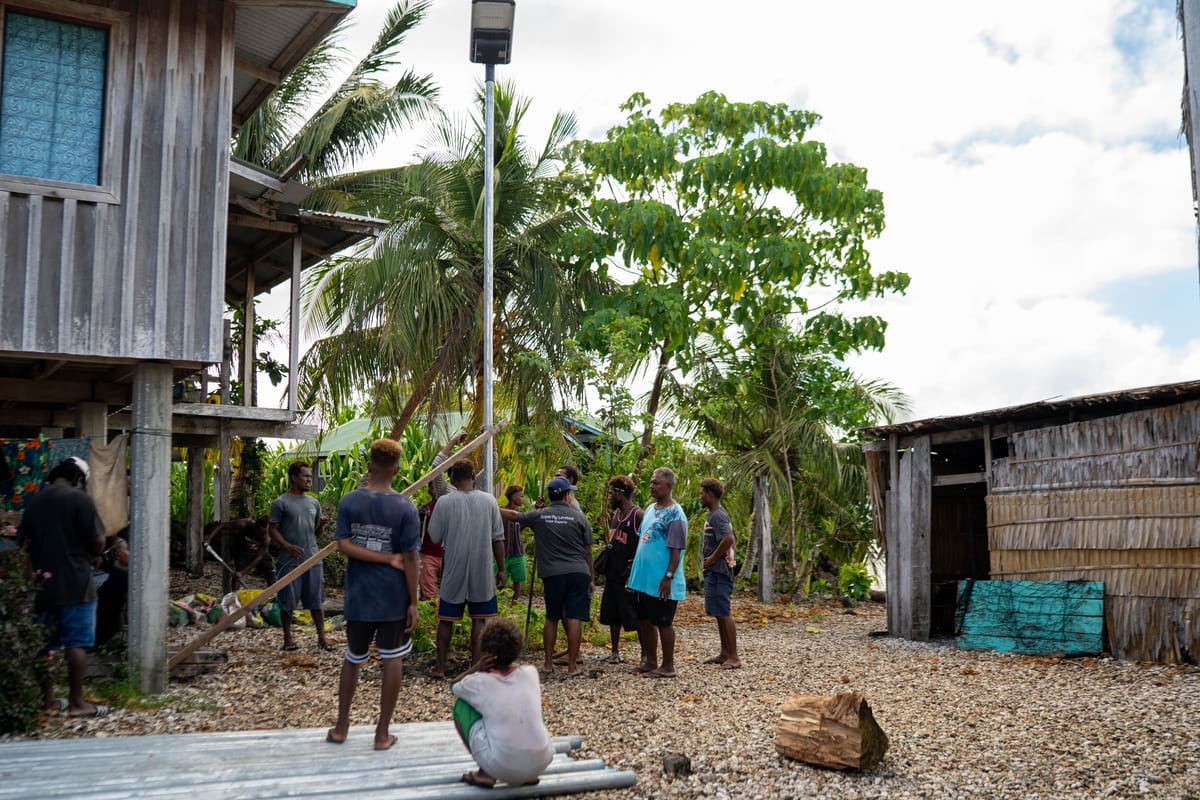
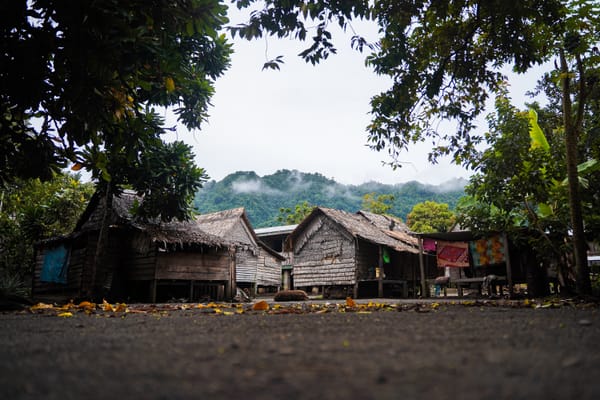
In Lau Lagoon, Malaita Province, Solomon Islands, people have built their homes upon the sea for centuries. Using coral rubble, they created a constellation of islands across the lagoon, where families continue to live today.
Funafou is one of these islands.
The people of Funafou belong to a wider society known as Imola i Asi, or ‘people of the sea’. They are renowned for their fishing skills and knowledge of the lagoon. For them, the ocean is home. It shapes who they are, how they live together and how they govern the waters around them.
These are not empty spaces. They are places with names and histories, where the Imola i Asi have exercised authority for centuries. As children grow up in Funafou, they learn who holds authority over different parts of the lagoon and how to care for those places. By continuing to live there, each generation puts that knowledge into practice and passes it on. This is how remaining in Funafou helps protect the ocean.
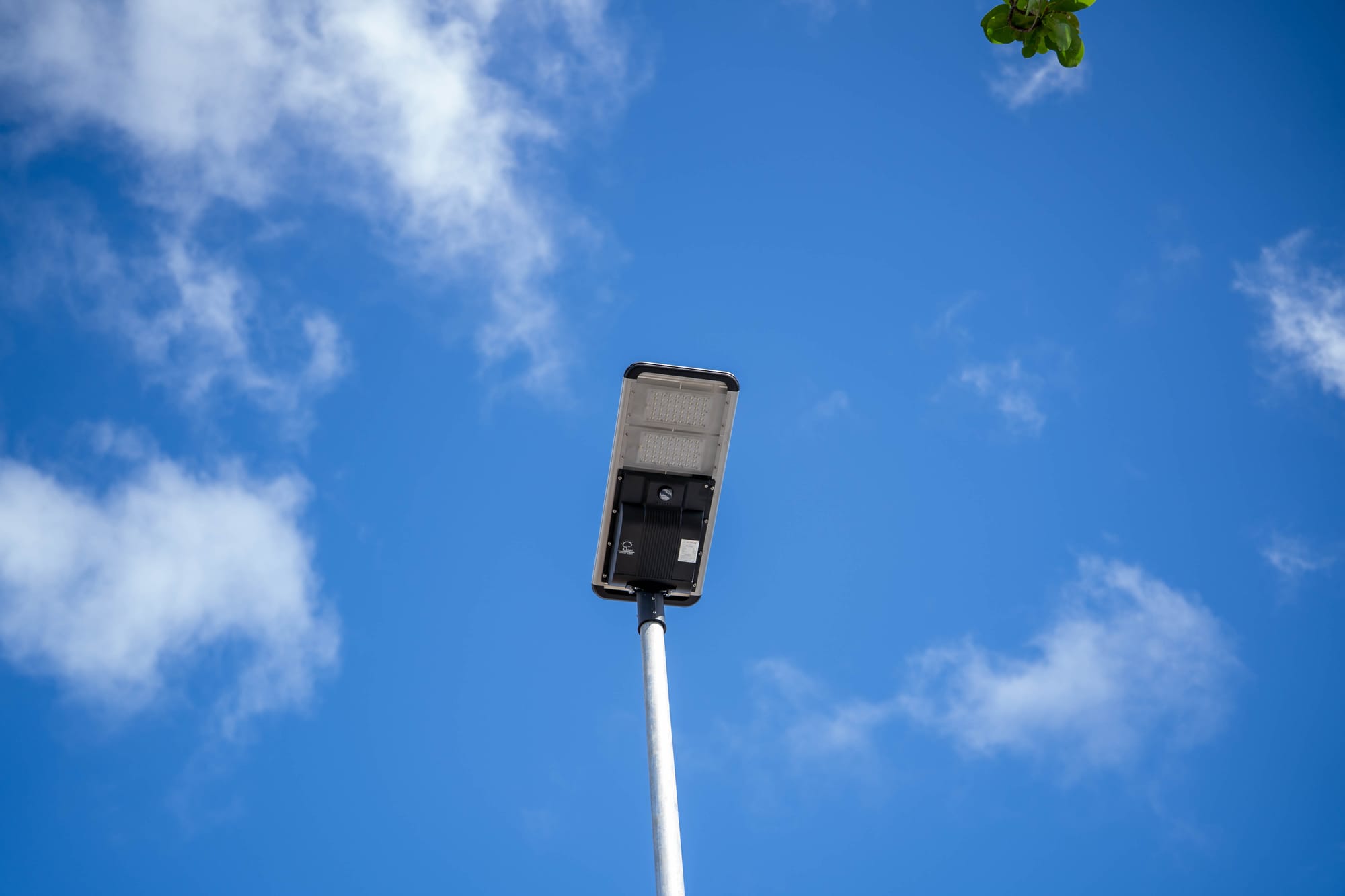
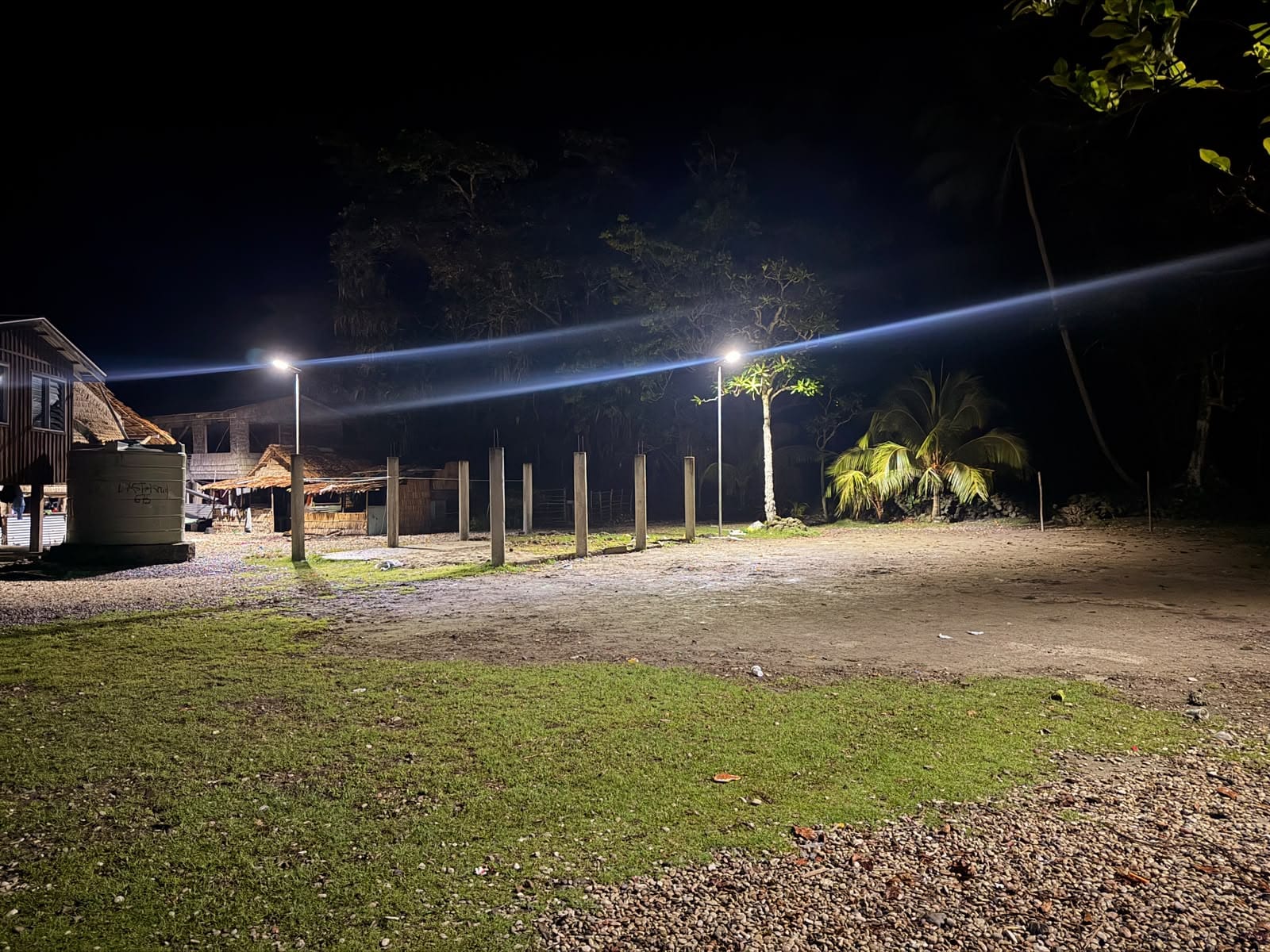
Installed Solar lights at Funafou Island. IKI/Jason Gagame
Through photography with communities across Solomon Islands, the Islands Knowledge Institute (IKI), with funding from Nia Tero, has been working to show what Indigenous ocean guardianship looks like through the people who live it. Across Melanesia’s vast ocean spaces are communities whose identities and responsibilities have been shaped by the places they call home.
When the IKI team sought permission to visit Funafou, the community welcomed them and allowed them to photograph aspects of their daily lives and their relationship with the sea. Funafou gave its time and trust and decided what it was willing to share. That contribution made it possible for people beyond the lagoon to see a way of life they may know little about, and it helped inform IKI and Nia Tero’s wider work.
When a community welcomes us and contributes to our work, how do we thank them?
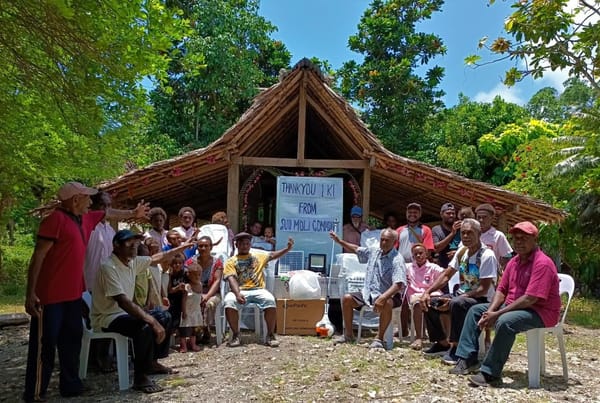
In Lau, one way of saying thank you is through Bae Lafe La, a practice of giving back. On 12 November 2026, IKI returned to Funafou to thank the community. Solar lighting was one of the needs Funafou had identified. With support from Nia Tero, IKI provided lights to help children and families go about their everyday activities after dark.
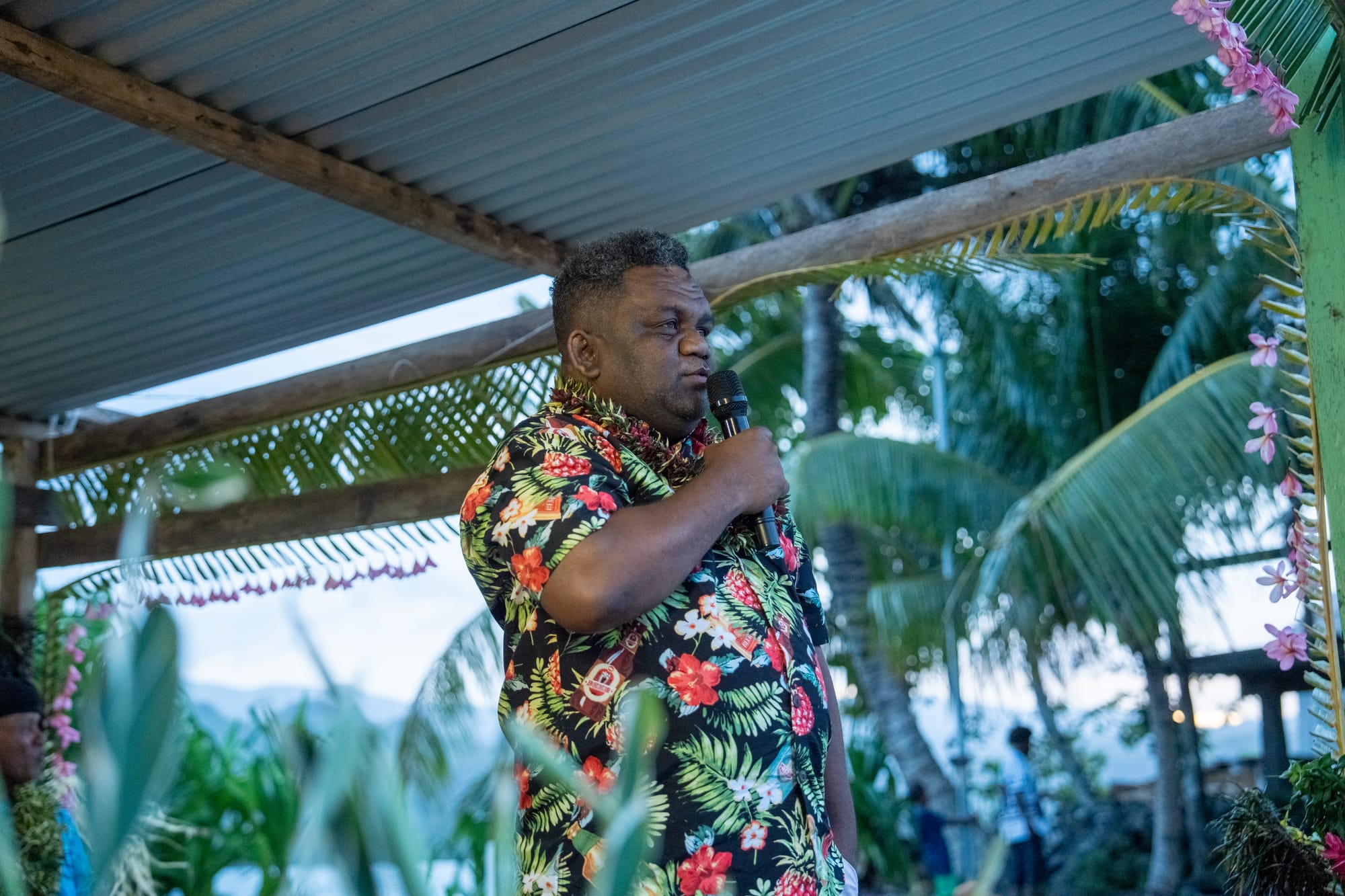
IKI Program Manager, John Maefasimaoma delivering his remarks during the handover ceremony. IKI/Jason Gagame
Thank you for what?
For those of us who have made our careers in development assistance and community development, this can be an uncomfortable question. Our work often begins by asking what a community needs and what support we can offer. When those questions frame the whole relationship, it is easy to overlook what communities already contribute. Bae Lafe La asks us to consider what the people of Funafou have been giving all along.
Funafou helped IKI and Nia Tero show what Indigenous ocean guardianship looks like. The people of Funafou are also doing something with consequences far beyond the lagoon. By remaining in the ocean they call home and continuing to live as Imola i Asi, they raise generations who know these waters, hold authority over them and care for them. That work helps sustain a healthy Pacific Ocean, and the health of the Pacific matters to the whole planet.
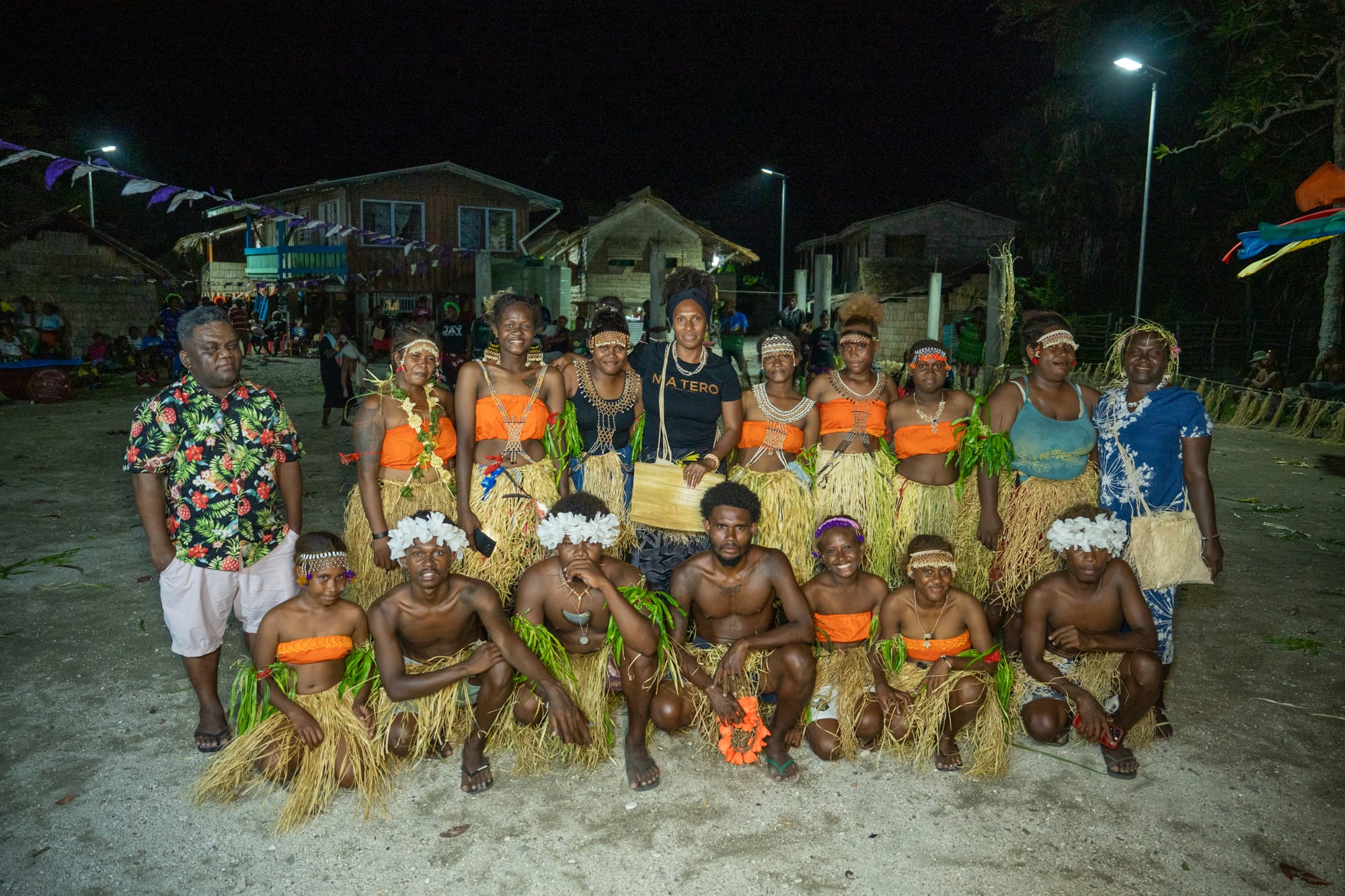
Taga'ai dancers posing for a group photo with IKI & Nia Tero team. IKI/Jason Gagame.
Life in Funafou also shows what reciprocity between people and place looks like. Each generation receives knowledge and responsibilities from those before them and carries them forward. In a world that often puts immediate demands ahead of what future generations will inherit, the people of Funafou have steadfastly refused to disappear. Their way of life shows us what it takes to live with the ocean and protect it over generations.
The people of Funafou and the wider Imola i Asi have been protecting the ocean all along, through generations of life and love. Their knowledge and authority come from living with the sea over that time. What they generously offered IKI and Nia Tero was a chance to see and appreciate part of that life. That is what we are thanking them for.
The Solar lights are a token of that thanks. The deeper thanks lies in continuing the relationship. For IKI and Nia Tero, that means recognizing both what the people of Funafou have shared with us and who they are in the waters they call home.
End
Islands Knowledge Institute Comms